
The Context: Launching Without Traction
Juno is an AI-powered platform that helps tax accountants submit returns faster and more accurately.
When we first met them in March 2025, they were:
- launching a new product
- doing ~£20k/month in revenue
- generating almost no inbound
- operating with a very lean team (founder + COO + technical team, with the COO acting as Head of Marketing)
They didn’t have a sales team, a repeatable GTM motion, or a CRM setup that could scale. The initial goal was simple:
Phase 1: Building Early Pipeline From Scratch
We started where Juno actually was — no traction, no inbound, no demand engine. We designed and launched a full outbound foundation:
- Email infrastructure and inbox setup
- LinkedIn automation using HeyReach
- Signal-based prospecting from LinkedIn engagement
To go deeper than generic lists, we submitted a FOIA request to access public IRS data and built a custom prompt to identify firm domains and decision-makers directly from the IRS database. This allowed us to write hyper-relevant messaging tied to each firm’s actual context. All data flowed directly into HubSpot, with automations handled via n8n.
Early results
- ~20 meetings booked per month
- £200k–£300k in pipeline generated monthly
- Outbound worked exactly as intended
The Inflection Point: Outbound Stopped Being the Problem
As pipeline grew, a new issue surfaced: Juno didn’t have the sales capacity or systems to handle the volume.
- No dedicated sales reps
- Manual follow-ups to convert deals
- No clear self-serve vs sales-led motion
- CRM stages didn’t reflect how buyers actually moved
Outbound wasn’t failing. Conversion was.
Phase 2: Fixing Conversion and Sales Efficiency
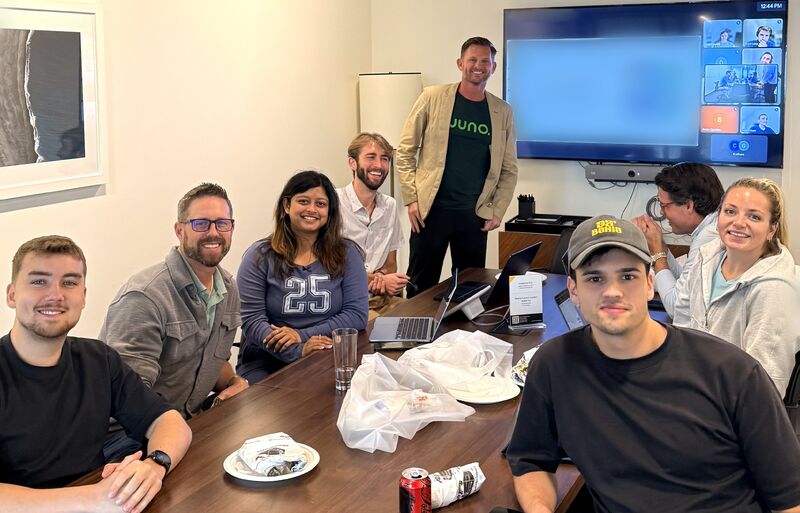
We ran a full GTM and RevOps audit, including on-site work at their office in Philadelphia, where we joined all-hands meetings, sat with the sales team, observed live workflows, and identified where reps and leadership were losing time.
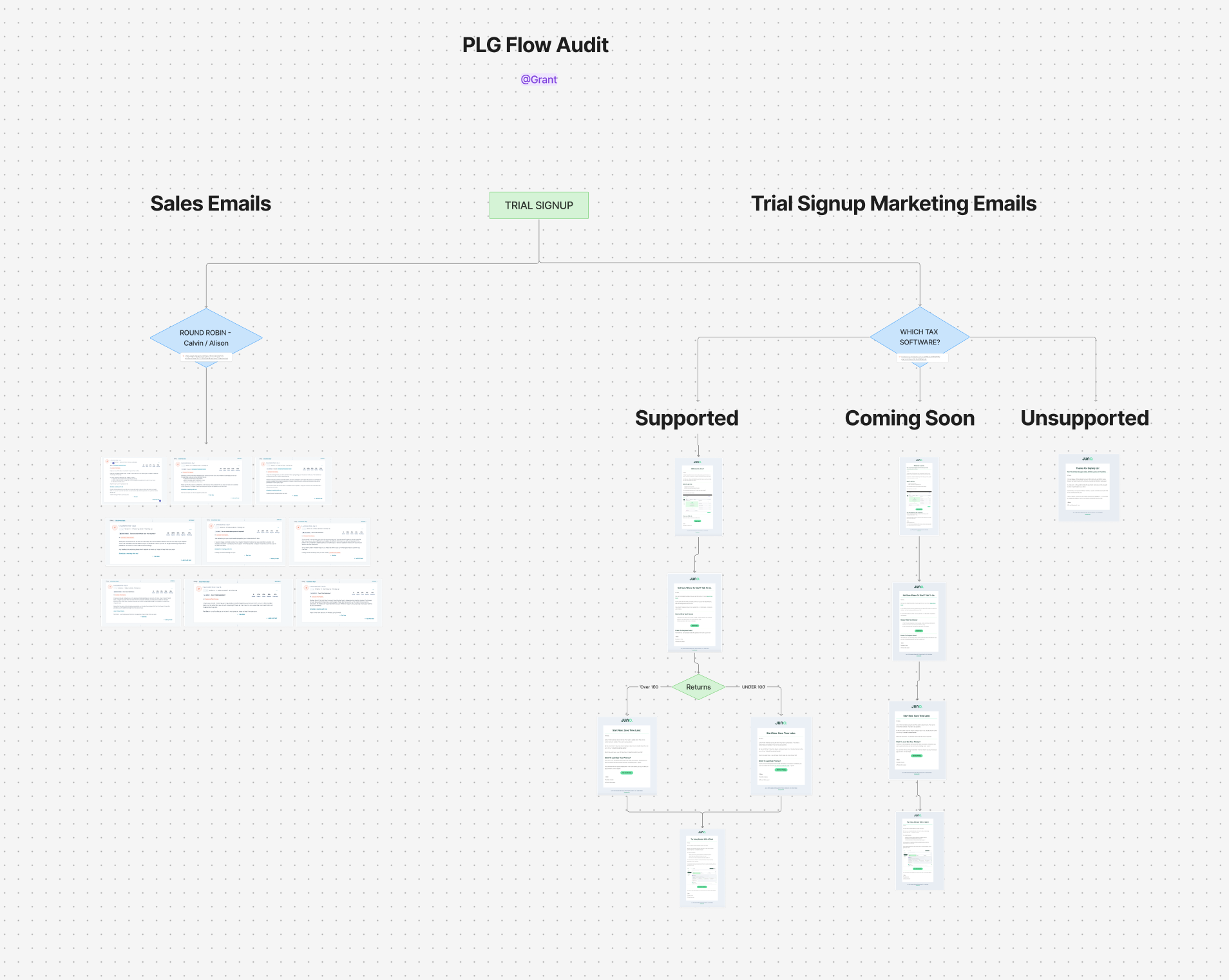
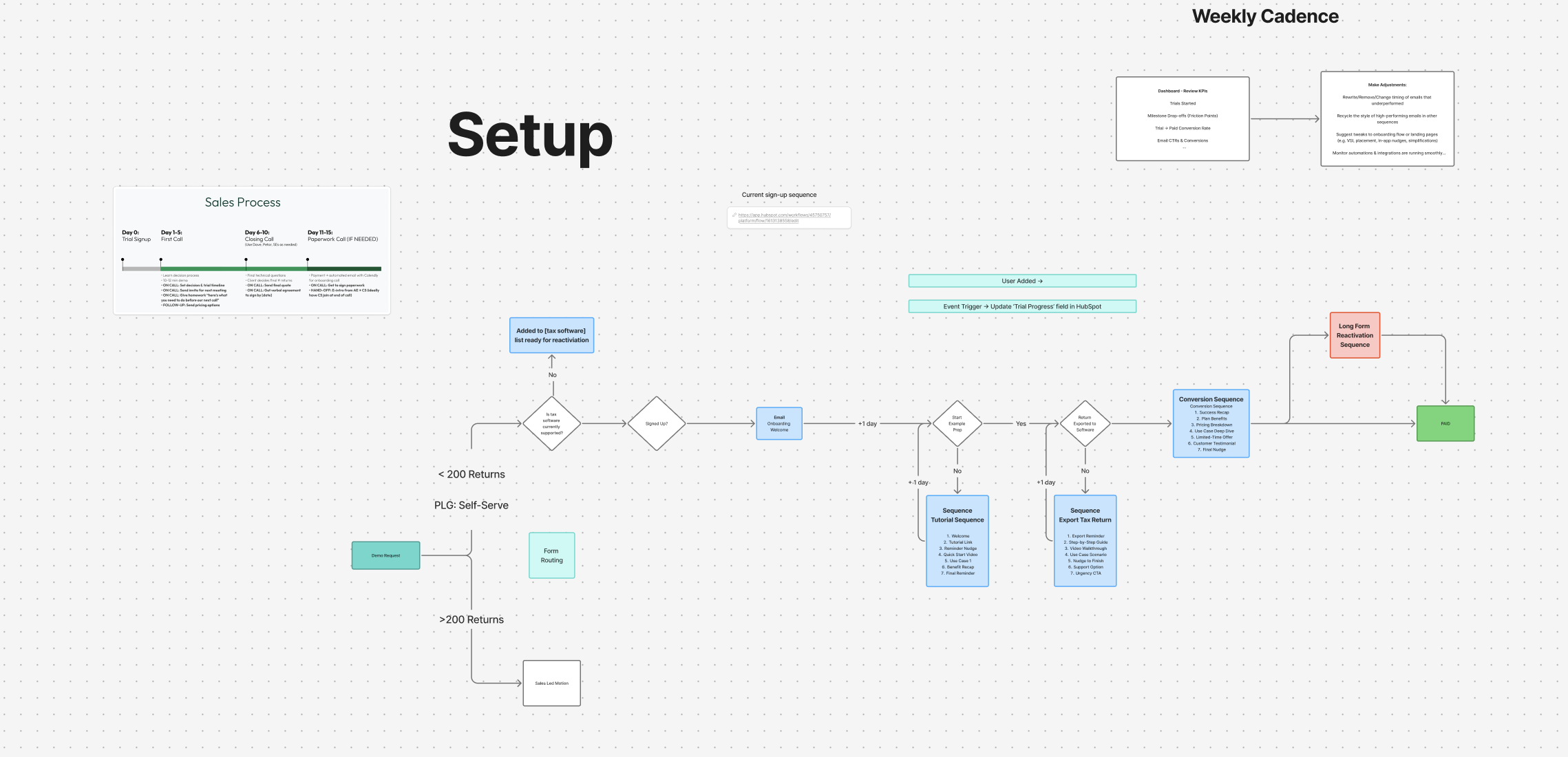
Based on this, we rebuilt the revenue system around conversion and enablement:
- CRM pipeline redesign in HubSpot
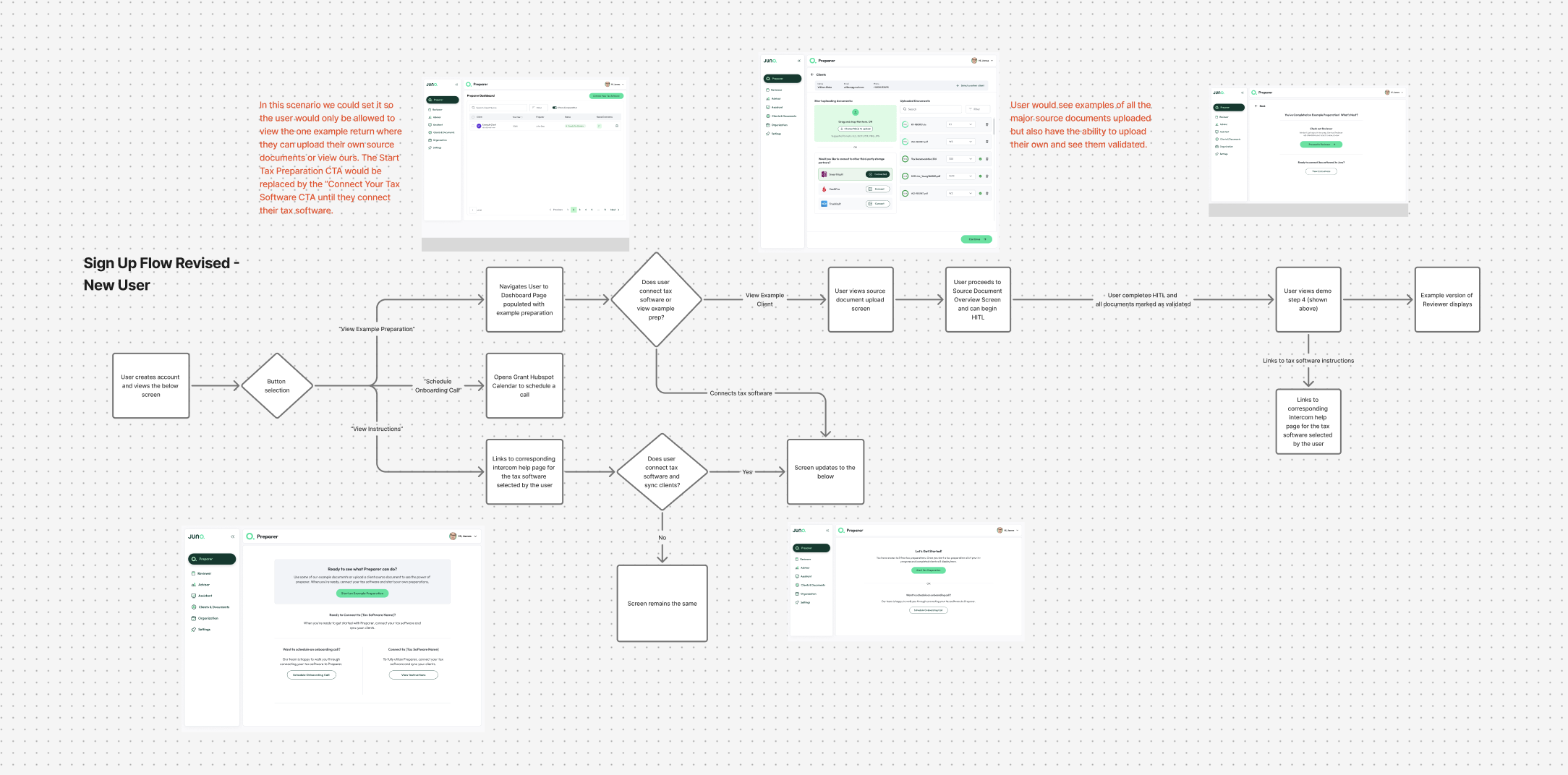
- Clear sales-led vs self-serve motions
- Usage-based nurture sequences
- Automated follow-ups (saving ~15 hrs/week)
This increased free trial → paid conversion by ~50% without adding headcount.
Phase 3: Sales Enablement Without Scaling the Team
To keep the sales team lean, we implemented:
- Fireflies call transcription → auto-logged in HubSpot
- AI-generated call summaries and pre-call agendas
- Automated quoting workflows
- Lead scoring and routing for future hires
We also built a partner quoting tool (no HubSpot access required), unlocking hundreds of thousands in partner-driven revenue, and a sales engineer AI agent trained on Juno’s knowledge base, saving ~30 hrs/week of senior engineering time.
Outcome
- Revenue scaled from ~£20k/month to a £700k record month
- Sales remained lean while pipeline quality improved
- Founders and engineers were removed from day-to-day deal friction
- Outbound created momentum, but systems unlocked scale
Key Takeaway
Juno didn’t have a demand problem. They had a capture and conversion problem. Outbound helped them start — but revenue only scaled once sales enablement, automation, and RevOps systems were fixed.
The Results
| Metric | Before | After |
|---|---|---|
| Monthly Revenue | ~£20k/month | £700k record month |
| Pipeline Generated | No outbound motion | $1.5M+ total |
| Meetings Booked | Almost none | 87 qualified meetings |
| Trial-Paid Conversion | Manual, inconsistent | ~50% lift, no new hires |
| Sales Team Capacity | Founders in every deal | ~45 hrs/week saved via AI |
Key Learnings
Signal Beats Volume
Signal-based targeting unlocked hyper-relevant messaging that generic list-builders couldn't match.
Outbound Reveals the Real Bottleneck
Meetings grew fast. The next constraint wasn't pipeline - it was conversion.
On-Site Changes Everything
Sitting with the sales team in Philadelphia surfaced problems no Slack audit ever would.
Systems > Headcount
AI agents and automations scaled revenue 9x without adding a single sales rep.